
Should You Dust or Vacuum First? A Practical Home Cleaning Order
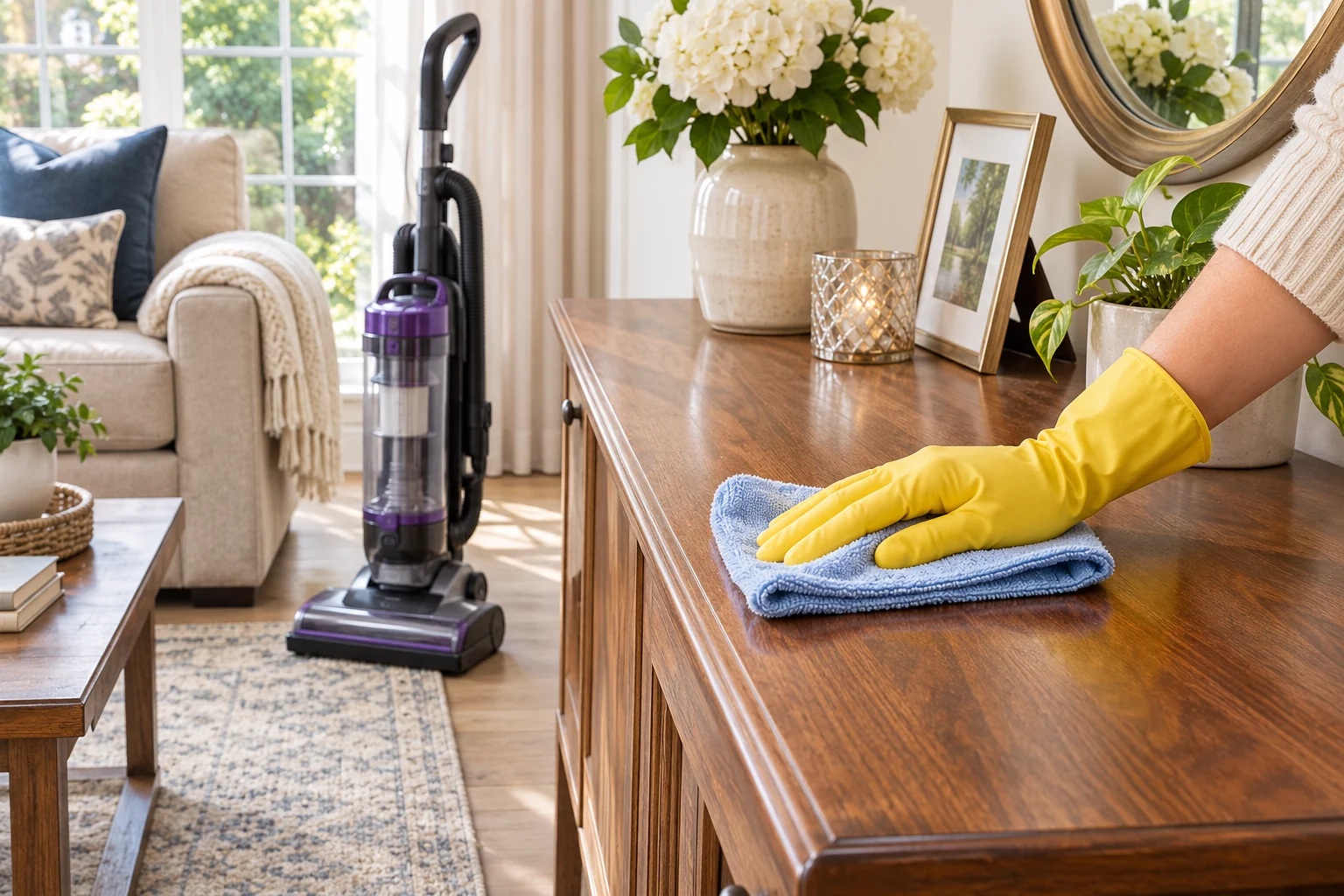
For routine house cleaning, dust surfaces before the final vacuuming of the floors. Work from higher accessible surfaces toward lower ones, collect dust with an appropriate cloth or attachment, and then clean the floor. That order helps avoid vacuuming the same area again after dust and crumbs fall onto it. If there is a spill, broken glass or another immediate problem, deal with that specific hazard first instead of following a routine sequence blindly.
For Charlotte households, the useful question is not just which task comes first. It is how to finish a room without repeatedly carrying dirt across surfaces you already cleaned. Here is a practical sequence for everyday upkeep, plus what to discuss when booking professional house cleaning.
Why the final floor pass belongs near the end
Dusting can dislodge particles from furniture, ledges and other surfaces. Some are collected by the cloth; others may land below. Cleaning those surfaces after finishing the floor creates extra work. The same applies when crumbs fall from a dining table or when debris is loosened from an accessible baseboard.
This does not mean every use of a vacuum must wait until the end. A suitable vacuum attachment can be part of dust removal on a surface that allows it. The distinction is between using a vacuum as a tool during the job and completing the final floor pass. Keep that last floor cleaning near the end of the room's sequence.
Start by clearing access, not by reorganizing the whole house
Put loose clothing, toys and everyday belongings into their usual places so the surfaces and floor can be reached. Move small, safe-to-handle items as needed, but do not turn a short maintenance clean into a full sorting project unless that is your intention.
If you are preparing for a professional visit, identify fragile items, damaged finishes and areas that should not be touched. Discuss heavy furniture and high surfaces in advance. Do not assume that moving heavy pieces, using ladders or handling delicate collections is included. Our preparation guide covers access and communication before a visit.
Follow a simple top-to-bottom sequence
A practical order for a living room or bedroom is:
- Clear accessible surfaces and remove ordinary loose clutter.
- Address higher reachable ledges and suitable fixtures with the correct tool.
- Dust furniture, shelves and smaller surfaces, using a clean section of cloth as it becomes dirty.
- Clean lower accessible surfaces and edges included in your plan.
- Vacuum the floor and accessible edges using the setting appropriate for the flooring.
- Damp-clean suitable hard flooring if needed, following its care instructions.
Work around the room in a consistent direction so you can track what is finished. Avoid walking back over a freshly cleaned floor to collect tools. A small caddy placed near the exit can make the sequence easier without adding more products to the job.
Collect dust rather than simply moving it
Choose a cloth or attachment suitable for the finish. A microfiber cloth can be useful for ordinary dust, but the surface manufacturer's instructions still matter. Some finishes tolerate a lightly damp cloth; others require a different method. Too much moisture can create a new problem on wood, electronics or other sensitive materials.
Fold the cloth so a clean face is available as you work. Replace or wash it when it becomes loaded with dust. Dragging the same dirty cloth across every surface can redistribute residue. Avoid spraying cleaning liquid directly into electronic equipment, openings or delicate components. Apply products only as their labels and the surface instructions allow.
A persistent greasy film may need a different approach from loose dust. More pressure or more product is not automatically the answer. If a finish is peeling, sticky or unfamiliar, pause and identify the material before proceeding.
What changes in kitchens and bathrooms?
The same general direction still helps, but these rooms have additional surface-specific tasks. Remove food debris and clean appropriate counters and fixtures before the final floor cleaning. Keep tools used in bathrooms separate from those used in food-preparation areas.
CDC guidance distinguishes cleaning from disinfecting. If disinfection is needed, use a product labeled for the intended surface and purpose, and follow the instructions, including any required wet contact time and rinsing. Do not mix cleaning products. A surface that has just been wiped is not automatically disinfected, and an ordinary housekeeping visit should not be described as making a home sterile.
For delicate stone, coated glass, wood cabinets or specialty flooring, share the care instructions with the cleaning team. The correct sequence cannot compensate for using an unsuitable product on a surface.
When vacuuming first can make sense
A preliminary pickup may be sensible if ordinary dry debris would otherwise be tracked through the home while you work. You can remove that debris first and still return for the final floor pass after dusting. The first pass solves an access problem; the last pass finishes the room.
Do not use a standard household vacuum for liquids, hot material or hazardous dust unless the equipment is specifically intended for that task. Renovation residue requires its own assessment. If the home has recently undergone construction, discuss the scope with a post-construction cleaning provider rather than treating all leftover material as ordinary household dust.
Why dust may seem to return quickly
A cleaning sequence removes accessible dust; it does not eliminate every source of new particles. Open windows, foot traffic, textiles and everyday activity can contribute to recurring buildup. An overloaded cloth, an unsuitable vacuum setting or neglected equipment maintenance may also undermine the work.
Check the vacuum manufacturer's instructions for the bin, bag, filters and attachments. Do not wash a filter unless it is washable, and allow any washable part to dry as directed before reinstalling it. If dust seems unusually persistent, note where it appears and how quickly it returns. That information is more useful to a cleaning professional than simply asking for stronger chemicals.
Match maintenance visits to the condition of the home
A routine visit and a detailed first cleaning may involve different amounts of work. Tell the team about visible buildup, pet hair, fragile finishes and the rooms that matter most. Ask what dusting includes: reachable furniture, baseboards, blinds, ceiling fans and high ledges may have different access limits or scope requirements.
Great Cleaning Pro offers deep cleaning and recurring maintenance for Charlotte and surrounding service areas. If you are deciding how often to book, our weekly-versus-biweekly guide focuses on frequency rather than the order of tasks.
Frequently asked questions
Should I mop before or after vacuuming?
For flooring that allows both methods, remove loose dry debris first, then use the approved damp-cleaning method. Follow the flooring manufacturer's instructions; not every floor tolerates the same amount of water or the same cleaner.
Do I need to wait a fixed number of minutes after dusting?
There is no universal waiting period that makes every room ready. Focus on collecting dust effectively, completing the surface tasks and finishing the floor afterward. Avoid creating clouds of dust that simply settle elsewhere.
Should ceiling fans be cleaned before furniture?
If the fan is safely accessible and included in the work, address it before the surfaces below. Switch it off first and use a method appropriate for the fixture. Do not climb on furniture or attempt unsafe access.
Does professional cleaning include every high surface?
Not automatically. Ask about reach limits, equipment, delicate items and any tasks requiring special access. Agree on the scope so the expected result matches the work being booked.
Get help keeping the routine manageable
A consistent sequence can make between-visit upkeep easier. When buildup or your schedule calls for professional help, request a cleaning appointment with Great Cleaning Pro or call 980-250-6495. Share your location, home size and priorities so the team can discuss an appropriate service.