
Sofa Cleaning Codes W, S, WS and X: What to Check Before Booking in Charlotte
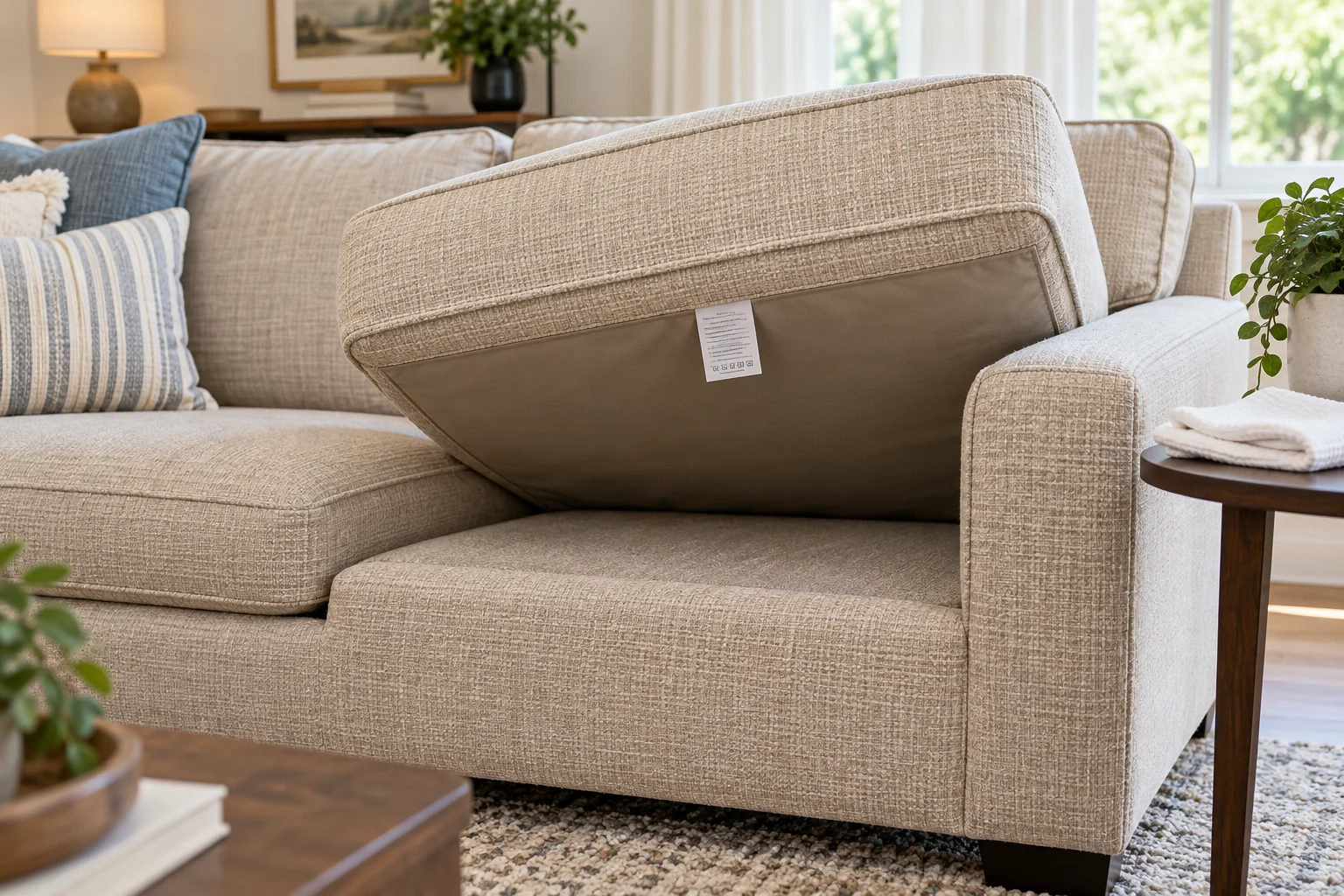
Before booking upholstery cleaning, photograph the care label on your sofa and send it with a photo of the whole piece. The letters W, S, WS or X help identify permitted care methods, but they do not tell the entire story. The manufacturer's instructions, the fabric's condition and any previous treatment all belong in the assessment.
For a Charlotte homeowner, the next step is not to choose a machine or a cleaning chemical from the letter alone. It is to ask whether a provider can assess and clean that particular piece using an appropriate method. This guide helps you gather useful information, understand the limits of a care code and request a more specific estimate without making promises about stain removal.
Find the label before choosing a method
Check the manufacturer's care information supplied with the furniture and any accessible label on the piece. Depending on its construction, information may be near a cushion, under the seat or on the frame. Do not tip heavy furniture or dismantle a mechanism to search for a tag. Ask the retailer or manufacturer for guidance when it is not readily accessible.
Take a clear photograph of the complete label rather than sending only a typed letter. Include the brand, model and fabric identification if available. A fiber-content label is not necessarily a cleaning instruction label, and a collection name alone may cover multiple upholstery options.
If your sofa has been reupholstered, the original furniture paperwork may no longer describe its current fabric. Mention that history and look for the replacement fabric's care guidance. Treat missing information as something to investigate, not permission to use any method.
What the common letters help you understand
The following is a starting point for a conversation, not a cleaning recipe. The instructions for the exact furniture take priority.
- W generally points to specified water-based upholstery care. It does not automatically authorize soaking, machine washing or hot-water extraction.
- S generally points to specified water-free solvent care. Do not substitute an ordinary water-based spray because it is convenient.
- WS, W/S or W-S generally allows specified approaches from both categories. Products and procedures still need to suit the fabric and manufacturer's directions.
- X generally excludes routine liquid cleaners and points to dry maintenance such as permitted vacuuming or light brushing. Ask about assessment rather than assuming a wet-cleaning appointment is suitable.
These distinctions are reflected in La-Z-Boy's fabric care instructions. Its W guidance, for example, does not recommend steam cleaning or hot-water extraction. That is a useful reminder to read the full instruction instead of treating one letter as blanket permission. Other furniture can have different detailed guidance.
A zipper does not make a cover washable
A removable-looking cushion cover can be designed to allow assembly or servicing rather than home laundering. Before taking it off, check the instructions for that particular cover. Confirm whether the directions concern spot care, overall upholstery cleaning or separate cover washing; these are not interchangeable tasks.
When requesting an estimate, explain whether any covers have already been washed or treated separately. Include photographs of changes in fit, texture or color if present. The provider needs to understand the current condition before proposing work. Cleaning should not be presented as a guaranteed way to reverse an earlier treatment or repair a damaged cover.
If the instructions are unclear, leave the cover in place while you request advice. This avoids turning a straightforward assessment into a separate problem with reassembly or uncertain fabric behavior.
Describe the concern, not just “a dirty couch”
Send a full view and a close view of the areas that concern you. Explain whether you are asking about general soil, a particular spill, a visible ring, an odor or several issues. Include when you first noticed the problem and what products or methods have already been tried, if known.
A stain's appearance alone may not identify its cause. Avoid guessing the substance as a certainty when you do not know. Say “unknown mark on the arm” rather than offering a confident diagnosis. Honest information helps the cleaner decide what still needs to be inspected.
Also identify loose trim, tears, worn areas or a fabric texture that changes with the direction of the pile. Some visible differences are not removable soil. Your estimate should distinguish a cleaning objective from a repair or a result that cannot be promised in advance.
Ask about suitability before reserving the visit
When contacting Great Cleaning Pro about upholstery cleaning, provide the care label and photographs and ask the team to confirm whether the piece fits the available service. Do not assume every provider offers every method described by a care code.
Useful questions include whether an inspection or small test is needed, what conditions could change the proposed approach, and whether any part of the furniture must be excluded. Ask how the team will communicate if the on-site assessment differs from what the photos suggested.
Discuss expected results in concrete terms. “Assess and clean the sofa using a suitable method” is different from “remove every mark.” If complete stain or odor removal is essential to your decision, say so before booking and ask what can actually be determined before work begins.
Compare estimates for the same furniture and scope
Describe the number of pieces, seating sections and loose cushions. Mention an ottoman, chaise or recliner rather than assuming it is included in the word “sofa.” Ask which surfaces and components the estimate covers, including the back, sides and cushions where relevant.
Explain access conditions: stairs, a tight doorway or furniture positioned against a wall. Ask what you should move and what the team can handle. Do not move heavy furniture yourself merely to prepare photographs or create access; coordinate the arrangements first.
Request guidance on when the furniture can be used after the proposed work. Avoid relying on a universal drying-time promise from an unrelated article. The method, fabric and conditions can differ. Arrange household use around the provider's instructions, especially if the sofa is the room's main seating.
Your pre-booking information checklist
- Full photograph of each furniture piece and close photographs of concerns.
- Complete care label and available brand, model or fabric information.
- Details of previous cleaning, spot products or reupholstery, when known.
- Number of sections, cushions and additional pieces to be quoted.
- Access conditions and any moving assistance that needs discussion.
- A clear statement of the result you hope to achieve and any constraints.
This list makes the inquiry more useful without requiring you to diagnose fabric or select chemicals. Keep the care information available on the day of the visit so that assumptions made during booking can be checked against the actual furniture.
Frequently asked questions
Does W mean my sofa can be steam cleaned?
Not automatically. Read the full manufacturer's instructions. A code allowing specified water-based spot care does not by itself approve heat, saturation or extraction equipment. Ask the provider to confirm an appropriate method for the particular piece.
Can a cleaner guarantee removal of an old stain?
A care code cannot establish that result. Share the stain history and previous treatments and ask what assessment is needed. Some marks may remain or reflect damage rather than removable soil. Get realistic expectations before approving the work.
What if there is no readable care label?
Contact the manufacturer or retailer with the model and fabric details if available. Tell the cleaning provider that the instructions are missing. Further assessment, a different approach or declining the work may be appropriate; absence of a label is not evidence that a method is suitable.
Can I book an X-coded sofa for wet cleaning?
Do not assume that wet cleaning is appropriate. Share the label first and ask for advice consistent with the manufacturer's directions. The available service may not suit the piece, and routine dry maintenance is different from an overall liquid-cleaning treatment.
Request an assessment for your Charlotte home
Start with the label and a few clear photographs, then contact Great Cleaning Pro to discuss suitability and scope. Once those details are confirmed, use the booking page to arrange the service. A clear description of your furniture helps both sides plan the visit around the actual piece rather than a generic promise.